Med-Surg Endocrine and Diabetes: High-Yield Nursing Review for Exams and the NCLEX
Why Med-Surg Endocrine Content Shows Up on Every Exam
If there is one unit that separates students who pass Med-Surg from those who struggle, it is the endocrine unit. Med-surg endocrine content covers diabetes, thyroid disease, adrenal disorders, and pituitary problems. These topics connect directly to fluid balance, electrolytes, cardiac rhythms, and medication safety. That is why your instructors test them heavily and why NCLEX endocrine questions appear across multiple client needs categories, from pharmacology to physiological adaptation.
The good news is that endocrine disorders follow predictable patterns. Most glands either produce too much hormone or too little, and the signs of one condition are usually the opposite of its partner. Once you understand what a hormone normally does, you can predict what happens when it is missing or in excess. This approach is far more reliable than memorizing isolated symptom lists the night before an exam.
If you are still getting oriented to the course, it helps to review what Med-Surg consists of in nursing school so you can see where the endocrine unit fits among cardiac, respiratory, and renal content. Pair that with these study tips from an A-student for passing Med-Surg to build a routine that keeps you ahead.
This guide focuses on what matters most for med-surg endocrine exams and the NCLEX: diabetes nursing priorities, insulin safety, emergency complications, and the classic hormone opposites you will be expected to recognize quickly. Each section explains the reasoning behind the answer, because clinical judgment questions reward understanding rather than recall.

Diabetes Nursing Fundamentals: Type 1, Type 2, and the Lab Values That Matter
Diabetes nursing begins with understanding the difference between the two main types. Type 1 diabetes is an autoimmune destruction of pancreatic beta cells, so the body produces little or no insulin. These clients require insulin for survival and are at risk for diabetic ketoacidosis. Type 2 diabetes involves insulin resistance and a gradual decline in insulin production. It is often managed with lifestyle changes, oral agents such as metformin, non-insulin injectables, and eventually insulin when needed.
You should know the diagnostic thresholds cold. A fasting plasma glucose of 126 mg/dL or higher, a random glucose of 200 mg/dL or higher with symptoms, or a hemoglobin A1C of 6.5 percent or higher supports a diagnosis. For most adults with diabetes, the A1C goal is below 7 percent. The A1C reflects average glucose over roughly two to three months, which makes it the best test for evaluating long-term control. Keep the nursing lab values cheat sheet nearby while you study so these numbers become automatic.

Hypoglycemia is the complication most likely to cause immediate harm, so expect it in nearly every diabetes nursing exam. A glucose below 70 mg/dL with shakiness, sweating, tachycardia, confusion, or irritability calls for fast action. The conscious client receives 15 grams of a simple carbohydrate, followed by a recheck in 15 minutes. Review the priority nursing action for hypoglycemia for a deeper breakdown of the rule of 15 and what to do when the client cannot swallow safely.
Client teaching is another heavily tested area. Expect questions on daily foot inspection, avoiding walking barefoot, rotating injection sites within the same anatomical region, and sick day rules. During illness, clients should continue taking insulin, check glucose every 3 to 4 hours, test for ketones if glucose stays above 240 mg/dL, and maintain fluid intake.

Insulin Safety: Onset, Peak, and Duration You Must Memorize
Insulin is a high-alert medication, and NCLEX endocrine questions love to test timing. The single most important concept is the peak, because that is when the client is most likely to become hypoglycemic. If you know when an insulin peak occurs, you can predict when to monitor closely and when the client must have food available.
Rapid-acting insulins such as lispro and aspart begin working in about 15 minutes, peak in roughly 1 to 2 hours, and last 3 to 5 hours. They must be given a meal, so the client should have the tray in front of them before injection. Short-acting regular insulin begins in 30 to 60 minutes, peaks in about 2 to 4 hours, and lasts 5 to 8 hours. Regular insulin is the insulin given IV, which is why it is used in insulin drips for diabetic ketoacidosis.
Intermediate-acting NPH begins in 1 to 2 hours, peaks in 4 to 12 hours, and lasts 12 to 18 hours. It is cloudy, and when mixed with regular insulin, remember the phrase clear before cloudy: draw up regular first so NPH does not contaminate the regular vial. Long-acting glargine and detemir have no pronounced peak and provide steady basal coverage for about 24 hours. Glargine should never be mixed with any other insulin.
Exams also test two morning glucose patterns. The dawn phenomenon is a morning rise caused by natural hormone release, usually managed by adjusting the evening dose timing or amount. The Somogyi effect is a rebound high after an unrecognized nighttime low, and checking glucose around 2 to 3 a.m. helps distinguish the two. For a broader look at drug classes beyond insulin, the NCLEX pharmacology cheat sheet covers oral antidiabetic agents and other high-yield medications. One frequently tested fact: metformin is typically held around procedures with iodinated contrast because of the risk of lactic acidosis in clients with impaired kidney function.

DKA vs. HHS: Priority Diabetes Nursing Actions in an Emergency
Diabetic ketoacidosis and hyperosmolar hyperglycemic state are the two hyperglycemic emergencies you must be able to compare. DKA typically affects clients with type 1 diabetes and develops over hours to a day. Without insulin, the body burns fat for fuel, producing ketones and metabolic acidosis. Expect glucose above 250 mg/dL, pH below 7.30, low bicarbonate, ketones in the blood and urine, fruity breath, and Kussmaul respirations, which are deep and rapid as the lungs try to blow off acid.
HHS usually occurs in older adults with type 2 diabetes and develops over days. Glucose is often above 600 mg/dL, and serum osmolality is very high, but there is little or no ketosis because some insulin is still present. Dehydration is profound, and neurological changes such as confusion or seizures are common. Reviewing fluid volume deficit clinical manifestations will help you recognize the tachycardia, hypotension, and poor skin turgor seen in both conditions.
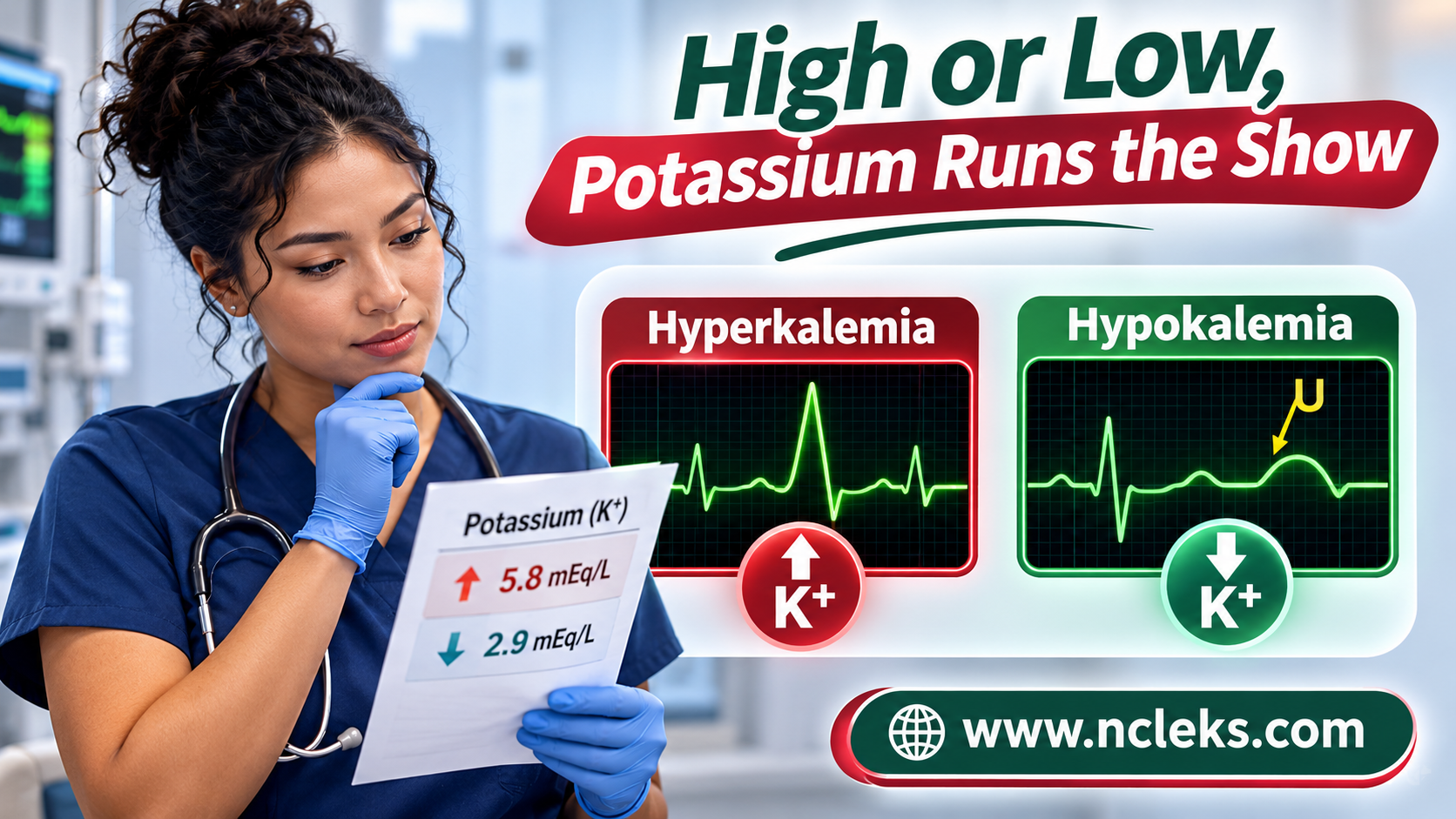
The treatment sequence is where diabetes nursing knowledge is truly tested. Fluids come first, usually 0.9 percent normal saline, to restore perfusion. Next comes IV regular insulin, but only after confirming potassium is adequate. Insulin drives potassium into the cells, so a client who starts with a low or low-normal potassium can develop dangerous hypokalemia and dysrhythmias. Potassium replacement is often added to IV fluids once urine output is confirmed. When glucose falls to about 200 to 250 mg/dL, dextrose is added to the fluids to prevent hypoglycemia and cerebral edema while insulin continues to clear ketones.
Cardiac monitoring is essential throughout. Brush up on hypokalemia vs. hyperkalemia ECG changes so you can identify flattened T waves and U waves as potassium shifts.

Thyroid Disorders: Hypothyroidism, Hyperthyroidism, and Their Emergencies
Thyroid hormone controls metabolism, so think of hyperthyroidism as everything speeding up and hypothyroidism as everything slowing down. Graves disease, the most common cause of hyperthyroidism, produces weight loss despite increased appetite, heat intolerance, tachycardia, anxiety, tremors, and exophthalmos. Hypothyroidism, often from Hashimoto thyroiditis, causes weight gain, cold intolerance, fatigue, constipation, bradycardia, dry skin, and slowed thinking.
Each condition has a life-threatening extreme that appears on med-surg endocrine exams. Thyroid storm presents with high fever, severe tachycardia, agitation, and possible heart failure. Treatment includes antithyroid drugs such as propylthiouracil or methimazole, beta blockers for heart rate control, cooling measures, and supportive care. Acetaminophen is preferred for fever because aspirin can increase free thyroid hormone and worsen the crisis. Myxedema coma is the opposite: hypothermia, bradycardia, hypoventilation, and decreased level of consciousness. Airway support and IV levothyroxine are priorities, and these clients are very sensitive to sedatives.
Levothyroxine teaching is a favorite exam topic. Clients take it on an empty stomach in the morning, usually 30 to 60 minutes before breakfast, and understand that therapy is lifelong. Report chest pain, palpitations, or nervousness, which may signal that the dose is too high.
After a thyroidectomy, the priorities are airway, bleeding, and calcium. Keep a tracheostomy kit at the bedside and assess for stridor or hoarseness. Accidental injury to the parathyroid glands can cause hypocalcemia, shown by tingling around the mouth, a positive Chvostek or Trousseau sign, and muscle spasms. When an exam presents several post-op clients, use the framework for stable vs. unstable patients to decide who needs you first.

Adrenal and Pituitary Disorders: Addison's, Cushing's, SIADH, and DI
The adrenal glands produce cortisol and aldosterone, and NCLEX endocrine questions frequently test their opposites. Addison disease is a deficiency of both hormones. Without cortisol, the client develops hypoglycemia, fatigue, and weight loss. Without aldosterone, the kidneys lose sodium and retain potassium, causing hyponatremia, hyperkalemia, and hypotension. Bronze skin pigmentation is a classic clue. The Addisonian crisis is an emergency managed with IV hydrocortisone, IV fluids, and close electrolyte monitoring.
Cushing syndrome is cortisol excess, often from long-term corticosteroid therapy. Look for moon face, buffalo hump, truncal obesity, thin fragile skin, purple striae, hyperglycemia, hypernatremia, hypokalemia, and increased infection risk. Nursing care focuses on infection prevention, glucose monitoring, skin protection, and fall prevention due to muscle wasting and osteoporosis. Clients on long-term steroids should never stop them abruptly because adrenal suppression can trigger a crisis.
The posterior pituitary releases antidiuretic hormone, and its two disorders are perfect opposites. In SIADH, too much ADH causes water retention, dilutional hyponatremia, low serum osmolality, and concentrated urine with a high specific gravity. Treatment includes fluid restriction, daily weights, and seizure precautions when sodium drops severely. In diabetes insipidus, too little ADH causes large volumes of dilute urine with a low specific gravity, intense thirst, and hypernatremia. Desmopressin replaces the missing hormone. A simple memory trick: in SIADH, the client soaks up water; in DI, the client dries out. For more practice interpreting these sodium shifts, review hyponatremia vs. hypernatremia NCLEX review questions.
How to Study Med-Surg Endocrine for NCLEX Endocrine Questions
The most efficient way to master med-surg endocrine content is to study in pairs. Put hyperthyroidism next to hypothyroidism, Addison next to Cushing, SIADH next to DI, and DKA next to HHS. Write out what the hormone normally does, then predict the signs of excess and deficiency before checking your notes. This method trains the reasoning that NCLEX endocrine questions demand and dramatically reduces how much you need to memorize.
Next, focus on priorities instead of trivia. For almost every endocrine emergency, the exam wants you to recognize airway, circulation, glucose, and electrolyte threats. Ask yourself which finding could kill the client fastest. A potassium of 3.0 before an insulin drip, stridor after thyroidectomy, or a glucose of 45 mg/dL in a confused client will almost always outrank teaching or comfort needs.
Finally, practice with realistic case-based items. The Next Generation NCLEX frequently uses diabetes nursing scenarios that unfold over several screens, asking you to recognize cues, prioritize hypotheses, and evaluate outcomes. Learning how to break down NextGen NCLEX case study questions will help you apply this med-surg endocrine knowledge under timed conditions. Work through practice questions on the NCLEKS exams and flashcard pages, review every rationale, including the ones you answered correctly, and track which endocrine topics keep tripping you up. Consistent review of these patterns is what turns a difficult unit into reliable points on exam day.



No comments yet. Be the first to comment!