Hypokalemia vs Hyperkalemia NCLEX Review & Practice Questions
If you’re a nursing student preparing for the NCLEX, you’re expected to think like a nurse under pressure, and few topics test that ability more than hypokalemia vs hyperkalemia. Potassium imbalance NCLEX questions appear frequently and are usually tied to priority decisions, and for good reason. Electrolyte imbalances affect cardiac rhythm and muscle function. Whether a patient has low potassium or high potassium levels, you as the nurse must recognize the signs and act fast.
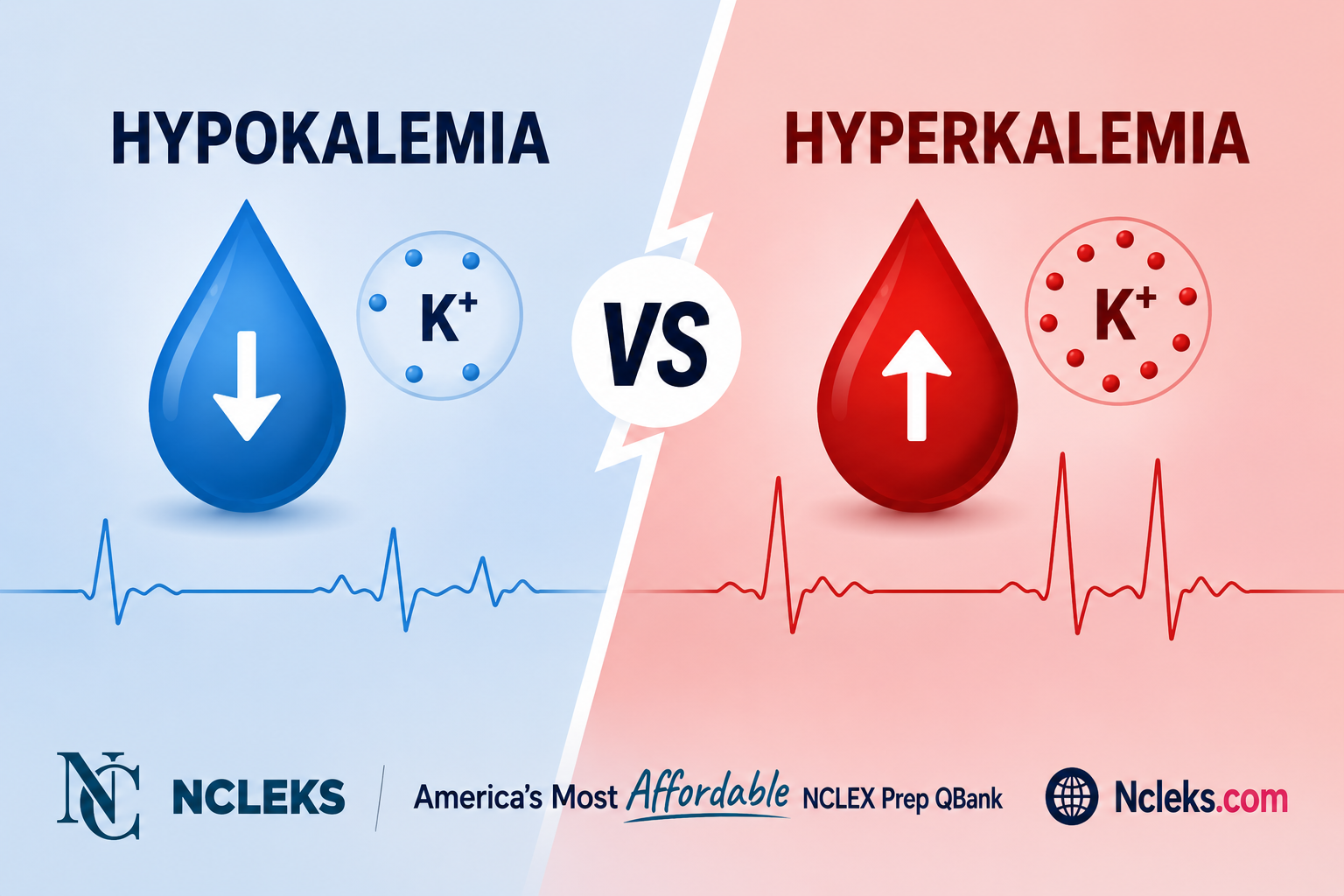
What Is the Difference between Hypokalemia and Hyperkalemia
Understanding hypokalemia vs hyperkalemia starts with knowledge of what potassium does in the body, how it is regulated and why small changes can have severe consequences.
Hypokalemia vs hyperkalemia
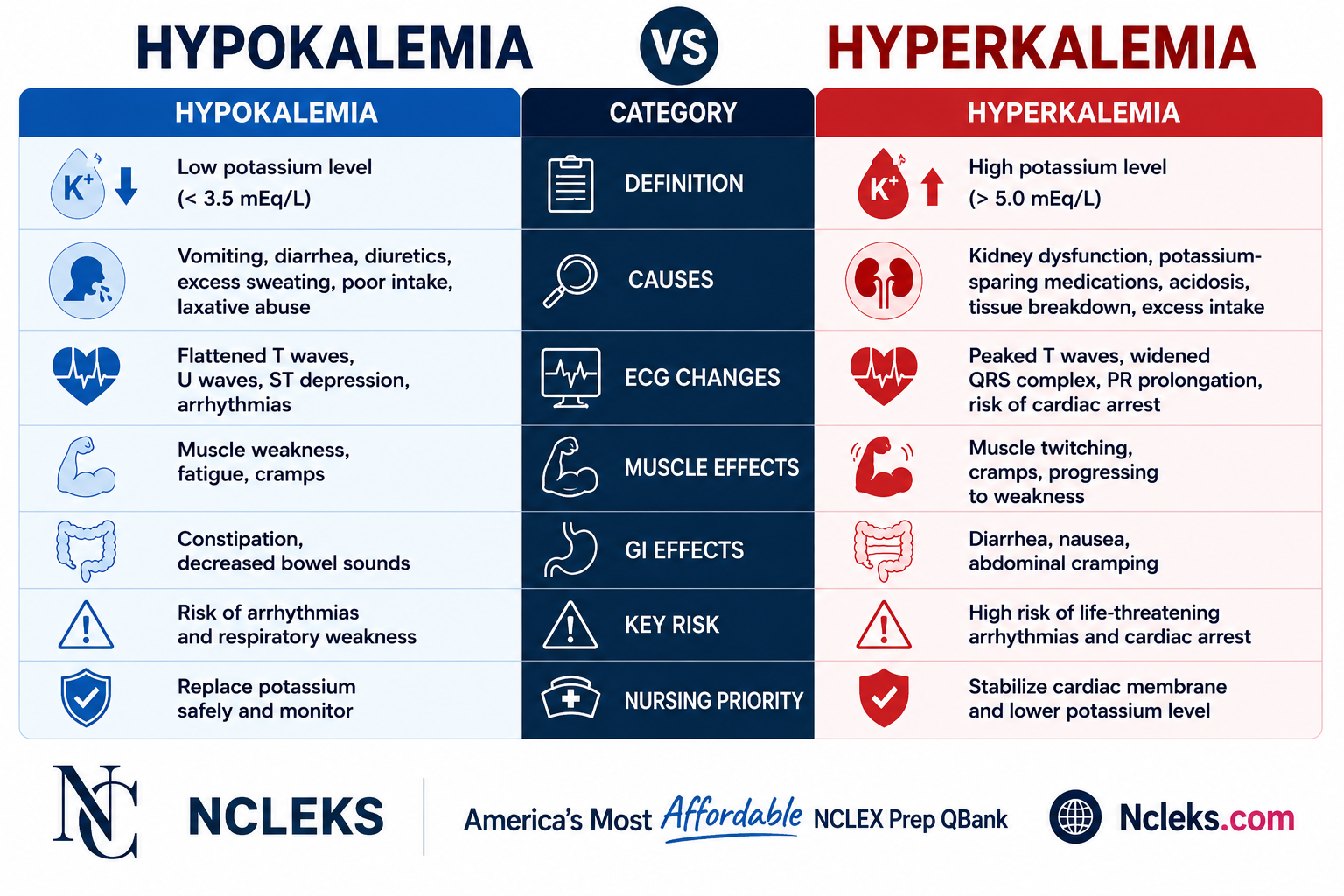
The primary distinction in hypokalemia vs hyperkalemia lies in the concentration of potassium in the bloodstream. Hypokalemia occurs when potassium levels fall below the normal range of approximately 3.5 mEq/L, while hyperkalemia occurs when levels rise above 5.0 mEq/L.
The body responds differently to low and high potassium levels. For instance, in hypokalemia, cellular activity becomes less responsive due to reduced electrical signalling. In hyperkalemia, the opposite occurs. The body's cells are initially overly stimulated, but this quickly progresses to dysfunction.
Potassium 101: Why it matters
Potassium is a crucial electrolyte in the human body that is required for maintaining normal cellular function, especially in nerves and muscle cells. It helps regulate electrical impulses, which are necessary for muscle contraction, including the rhythmic contractions of the heart. Studies show that 98% of the body’s total potassium is found inside the cells while only 2% circulates in the bloodstream.
One of the important functions is its role in maintaining the balance between intracellular and extracellular fluid. When potassium levels shift, this balance is disrupted affecting critical body functions. The heart is sensitive to potassium changes since cardiac muscles rely on precise potassium gradients to depolarize and repolarize with every beat. When those gradients are disrupted, it could be the difference between a normal sinus rhythm and a lethal arrhythmia. As a nurse, you should recognize the changes instantly from the EKG results.
Why nurses must understand potassium imbalance NCLEX questions
Potassium imbalances don’t always announce themselves and can be easy to miss. Therefore, your ability to connect a patient’s symptoms to potassium imbalances and interpret the EKG is a life-saving skill.
Also Read: What Happens If You Fail the Nursing School Exit Exam? What to Do Next
In most cases, potassium imbalance NCLEX questions test critical thinking, prioritization skills and patient safety all at once. You’ll be given a combination of lab results, clinical details and medical history in your NCLEX exam. Your ability to interpret the information and distinguish between hypokalemia and hyperkalemia will help you pass your NCLEX.

Signs And Symptoms Of Hypokalemia vs Hyperkalemia
The body responds differently depending on whether potassium is low or high. If you can recognize the symptoms of hypokalemia vs hyperkalemia, you can answer NCLEX questions easily.
Hypokalemia symptoms
In hypokalemia, the body's systems tend to slow down. Some of the common signs include:
- Muscle weakness or fatigue
- Decreased reflexes
- Constipation
- General weakness
- Shallow breathing in severe cases
Since potassium is essential for muscle contraction, low levels can make muscles, including the heart, less responsive. This is why arrhythmias are a major concern in hypokalemia.
Hyperkalemia symptoms
In hyperkalemia, some of the symptoms are:
- Muscle cramps or twitching
- Diarrhea
- Numbness or tingling
- Irregular heartbeat
- Progressing muscle weakness
As potassium continues to rise, the heart becomes more unstable, which is why hyperkalemia is treated as an emergency. A key concept in hypokalemia vs hyperkalemia is the progression of the symptoms and understanding the distinctions allows you to interpret symptoms quickly.
ECG changes in Hypokalemia vs hyperkalemia
Electrocardiogram findings are a major testing point when studying hypokalemia vs hyperkalemia. The heart is extremely sensitive to potassium levels, and even subtle changes can alter its rhythm.
In hypokalemia, the ECG shows flattened T waves and the appearance of U waves. These changes reflect delayed repolarization of the heart.
In hyperkalemia, you’ll notice more pronounced ECG changes, such as peaked T waves and a widened QRS complex. In severe cases, this can progress to life-threatening conditions such as cardiac arrest.
Most potassium imbalance NCLEX questions will describe ECG findings instead of stating potassium levels. Identifying these patterns can help you recognize the imbalance and pass your exams.
A nurse is assessing a patient who reports muscle weakness, fatigue, and constipation. Which electrolyte imbalance should the nurse suspect?
Causes Of Low And High Potassium Levels
Understanding the causes behind hypokalemia vs hyperkalemia helps you interpret scenario-based questions in NCLEX exams. Instead of being told the diagnosis, you are often given clues that point toward it.
Causes of hypokalemia
Hypokalemia usually occurs due to potassium loss. This happens when a patient experiences prolonged vomiting, diarrhea or use of diuretics. These situations reduces potassium levels faster than the body can replace it. Poor dietary intake can also contribute to imbalance.
Also Read: 9 Key Advantages of Becoming an LPN Before Pursuing an RN License
Causes of hyperkalemia
Hyperkalemia is often related to the body’s inability to eliminate potassium. Kidney dysfunction is a major factor since kidneys are responsible for regulating potassium imbalance. When a patient has a kidney infection or impairment, potassium accumulates in the bloodstream.

Nursing Interventions For Hypokalemia vs Hyperkalemia
Potassium imbalance NCLEX questions also test the interventions and priority actions. This checks your ability to act fast to ensure the patient’s safety.
When treating hypokalemia, the goal is to restore potassium to normal levels. You can do this through oral or intravenous supplementation. However, administration needs to be done slowly and carefully. Potassium isn’t given as a rapid IV push because it can cause cardiac arrest.
In hyperkalemia, the priority is to protect the heart and reduce potassium levels. You provide medications that stabilize cardiac activity, shift potassium into cells or remove it from the body. Due to the urgency associated with handling cardiac complications, hyperkalemia is an emergency. In NCLEX questions, you may be asked to determine which action to take first. You can apply the ABCs and Maslow's hierarchy framework since potassium imbalances fall under circulation, making cardiac stability a top priority.
A patient’s laboratory results show a potassium level of 5.8 mEq/L. What is the nurse’s priority action?
Hypokalemia and Hyperkalemia NCLEX Question Types
Different formats are used to test your understanding of hypokalemia vs hyperkalemia. They include:
- Lab value interpretation: You may be given potassium levels and asked to identify the condition or next step. These potassium imbalance NCLEX questions test your ability to interpret numbers and understand normal and abnormal potassium levels.
- Symptoms-based questions: These questions describe patient signs and require you to identify whether the issue is hypokalemia or hyperkalemia.
- Priority nursing action questions: These focus on what the nurse should do first. In many cases, potassium imbalance NCLEX questions expect you to prioritize cardiac safety.
- Medication safety questions: You may be asked to identify incorrect or unsafe medication and when to hold medication. These questions often include common mistakes related to potassium administration.
Tips For Answering Hypokalemia And Hyperkalemia NCLEX Questions
Acing your potassium imbalance NCLEX questions can improve your performance. The first step is identifying the patient’s main problem in the scenario presented. Is the issue related to weakness, irregular heart rhythm, or gastrointestinal changes? This initial step often points you toward either hypokalemia or hyperkalemia.
Pay close attention to the heart by checking for any mention of cardiac symptoms or ECG changes. When a patient has cardiac issues, prioritizing intervention that protects the heart is vital. Check also if the symptoms suggest that the body is slowing down or becoming unstable. This simple distinction can guide your decision-making in hypokalemia vs hyperkalemia scenarios.
If you want to excel in the modern NCLEX exams, ensure you try practice tests. Exposure to a variety of potassium imbalance NCLEX questions helps you recognize patterns, avoid common traps, and build confidence. Over time, what initially feels complex becomes more intuitive.
A nurse reviews a patient’s ECG and notes tall, peaked T waves. Which condition does this finding most likely indicate?
Mastering hypokalemia vs hyperkalemia is a critical step in NCLEX preparation. These imbalances are not just about lab values, they reflect changes in how the body functions at a fundamental level. By focusing on patterns, understanding causes, and prioritizing safety, you can approach potassium imbalance NCLEX questions with clarity and confidence.



No comments yet. Be the first to comment!