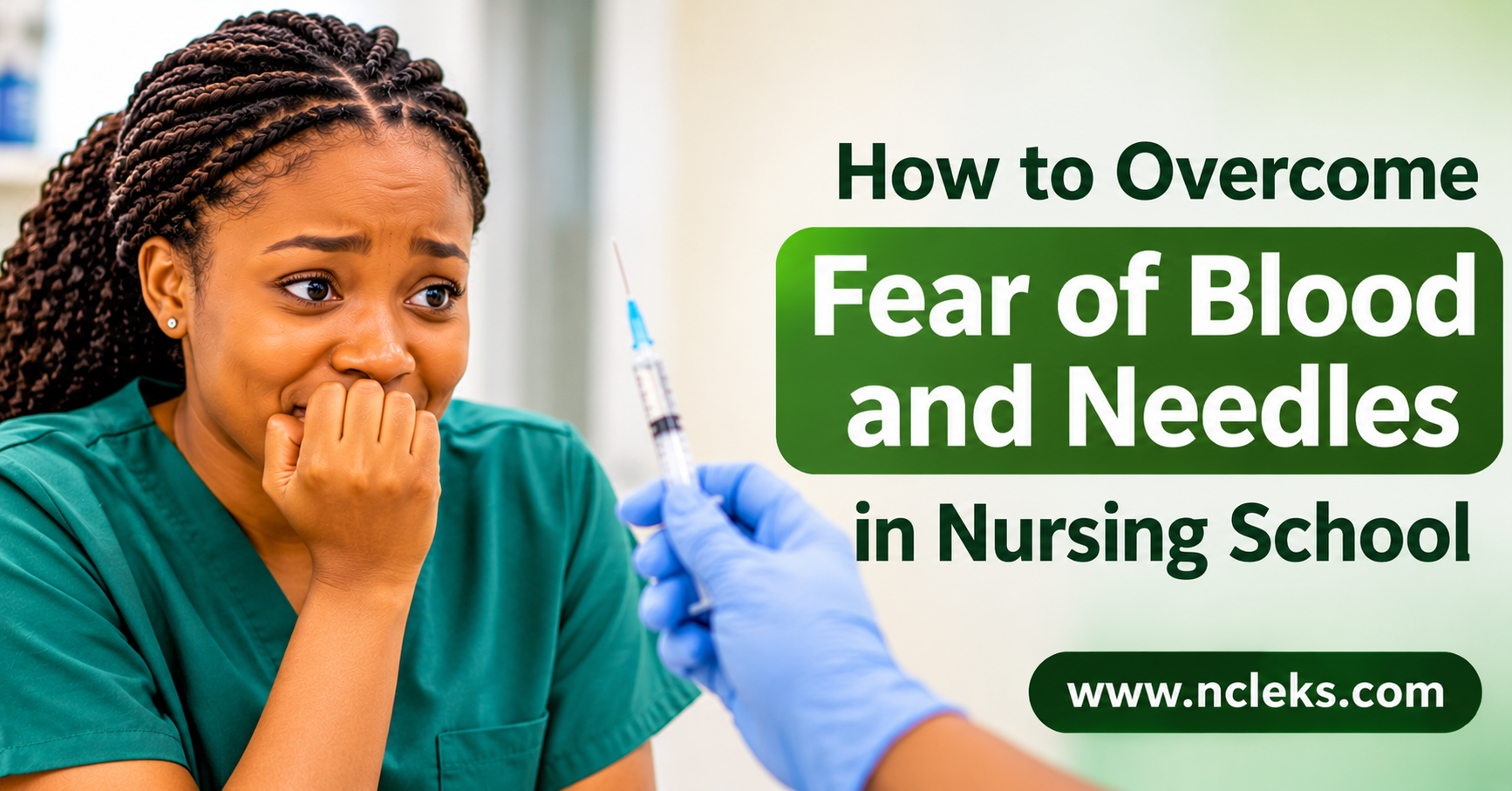
How to Overcome Fear of Blood and Needles in Nursing School
Why Fear of Blood and Needles Is More Common Than You Think
If your stomach drops when you see a syringe or you feel lightheaded watching a blood draw, you are not alone. A fear of needles or a fear of blood affects a surprising number of people, and nursing students are no exception. Many students quietly worry that this reaction means they chose the wrong career. It does not. Plenty of experienced nurses started their programs feeling exactly the same way. They learned to manage the response through practice, preparation, and a few evidence-based techniques.
The good news is that this fear is highly treatable. Unlike some anxieties that linger for years, discomfort with blood and needles usually fades with structured, repeated exposure. Your nursing program gives you a built-in advantage, because skills lab, simulation, and clinicals all provide safe, gradual opportunities to face the trigger. If this fear is piling onto stress you already feel, our step-by-step survival guide for overwhelmed nursing students can help you put it in perspective.
It also helps to remember that feeling nervous around needles says nothing about your competence or your compassion. Some of the most skilled IV nurses on any unit once had to sit down during their first injection lab. The rest of this guide explains why your body reacts the way it does, how to stop a vasovagal response before it turns into fainting, and how to build confidence one step at a time. You will also see how this same content shows up on nursing exams and the NCLEX, so the work you put into conquering the fear pays off twice.
Understanding the Vasovagal Response Behind Fainting
To overcome a fear of blood, it helps to understand what is happening physically. Most phobias trigger a classic fight-or-flight reaction in which heart rate and blood pressure rise and stay elevated. Blood-injection-injury phobia is different because it often produces a two-phase reaction. First, your heart rate and blood pressure rise briefly. Then the vagus nerve overcorrects, causing a sudden drop in heart rate and blood pressure. This drop is called the vasovagal response, and when blood flow to the brain decreases enough, you faint.
Recognizing the warning signs gives you time to act. Early symptoms of a vasovagal response include lightheadedness, nausea, sudden sweating, feeling warm or flushed, pale skin, yawning, ringing in the ears, and tunnel or blurred vision. Some students describe a sense that the room is drifting far away. These symptoms are your signal to sit or lie down immediately, not to push through. Fainting while standing is the real danger, because a fall can cause a head injury or contaminate a sterile field.
This physiology also appears on exams, so learning it carefully now is time well spent. Patients experience vasovagal syncope during venipuncture, IV starts, painful procedures, and even straining during a bowel movement. Understanding why heart rate suddenly slows connects nicely to rhythm interpretation, which you can review in our 5-step guide to reading EKG rhythms. Knowing the mechanism also reassures many students. Once you see the reaction as a predictable reflex rather than a personal weakness, it becomes far less frightening.

The Applied Tension Technique: Your Best Defense Against Fainting
Because the vasovagal response involves a drop in blood pressure, the usual advice to 'just relax' can actually make fainting more likely. The technique with the strongest evidence for blood and needle phobia is called applied tension, developed by Swedish psychologist Lars-Goran Ost. It works by deliberately raising your blood pressure so your brain stays well perfused.
Here is how to practice it. Sit comfortably and tense the large muscles of your arms, legs, and torso at the same time, as if you are squeezing your whole body. Hold that tension for about 10 to 15 seconds, or until you feel warmth rising into your face. Then release and return to normal sitting for about 20 to 30 seconds without slumping into deep relaxation. Repeat the cycle about five times. Practice several times a day for a week or so before you need it, so the technique becomes automatic under pressure.
Once you are comfortable, use applied tension while confronting the things that trigger your fear of needles, such as pictures of syringes or videos of blood draws. During clinicals, you can discreetly tense your thigh and gluteal muscles while standing at the bedside, which keeps your hands free for the task. Avoid holding your breath while tensing, since breath-holding can worsen dizziness. Pair the technique with good basics: drink water, eat a real breakfast, and never skip meals on lab days, because dehydration and low blood sugar make fainting more likely. For more ways to stay composed during graded skills, our article on tips to pass your practical check-offs in the simulation lab covers how to manage nerves when an instructor is watching.

Build a Gradual Exposure Ladder Before Skills Lab
Exposure therapy is another proven tool for reducing a fear of needles. The idea is simple: you face the trigger in small, manageable steps until your brain learns it is not dangerous. Each step should feel uncomfortable but tolerable, and you stay with it until your anxiety drops by roughly half before moving to the next level.
A sample ladder might start with reading about injections, then looking at photos of capped syringes, then holding a capped syringe in your hand, then watching short videos of IV insertions, then watching a classmate practice on a training arm, and finally performing the skill yourself on a manikin. Later steps might include observing a real blood draw during clinicals and eventually performing one under supervision. This ladder works equally well for a fear of blood; simply swap syringe images for photos of wound care or blood collection tubes. Use applied tension at every rung if you feel lightheaded.
The skills lab is the perfect training ground because the stakes are low and the equipment does not bleed. Before your venipuncture or IV session, read through this step-by-step guide to starting an IV so the procedure feels familiar rather than mysterious. Familiarity reduces anticipatory anxiety, which is often worse than the procedure itself. The same principle applies to other invasive skills, and reviewing a Foley catheter insertion checklist ahead of time helps you focus on technique instead of fear. Track your progress in a notebook so you can see how far you have come on the days when the fear feels stubborn.

Managing Your Fear of Blood During Clinicals
Clinicals bring the real thing: actual patients, actual blood, and an unpredictable environment. Preparation makes a huge difference. Eat a balanced meal with protein before your shift, carry a water bottle and a small snack, and know where you can sit down quickly on your unit. Our complete checklist for what to bring to clinicals can help you pack smart so you are never running on empty.
Tell your clinical instructor about your fear of blood or fear of needles early in the rotation. This is not an admission of weakness; it is a professional safety disclosure. Instructors have seen it many times and usually appreciate the honesty, because it allows them to position you safely and step in if needed. If you notice symptoms of a vasovagal response during a procedure, say so calmly, step back, and sit or lower yourself to the floor. Patient safety comes first, so never continue a sterile or invasive task if you might lose consciousness.
Shift your attention from the blood to the patient and the task. Many students find that concentrating on the patient's face, their vital signs, or the next step of the procedure keeps the mind busy enough to blunt the fear response. Practicing a thorough head-to-toe assessment also builds confidence with the physical side of nursing, so blood and wounds become one part of a larger clinical picture rather than the only thing you notice. Over a semester, most students find that repeated exposure on the unit does more than any single technique.

How Blood and Needle Knowledge Shows Up on the NCLEX
Overcoming your fear of needles is not only about clinical comfort, because the same content appears on nursing exams and the NCLEX. Questions often test whether you can recognize a vasovagal response in a patient during venipuncture and choose the safest action. The priority is preventing injury from a fall, so the correct answer usually involves stopping the procedure, helping the patient lie down, and elevating the legs to improve venous return to the heart. Our guide to choosing the best patient position on NCLEX questions explains why positioning answers so often win in these scenarios.
Needle safety is another high-yield area. Expect questions on never recapping used needles, disposing of sharps immediately in a puncture-resistant container, and responding to a needlestick injury by washing the site with soap and water, reporting it right away, and following the facility's post-exposure protocol. These items test core safety principles, so reviewing how to answer risk-based NCLEX questions will sharpen your judgment.
Interestingly, studying this material can reduce your fear of blood and needles at the same time. When you know exactly what to do in every scenario, needles stop feeling like a threat and start feeling like tools you know how to handle. Knowledge is a form of exposure, and the practice questions at the end of this article are a good place to start testing yourself.

When to Seek Extra Help and How to Stay Patient With Yourself
Most students improve significantly within a few weeks of consistent practice, but some need more support. If your fear of needles causes panic attacks, makes you avoid lab days entirely, or still triggers a vasovagal response despite regular use of applied tension, reach out to your school's counseling center. A licensed therapist trained in cognitive behavioral therapy can guide structured exposure and help you challenge thoughts like 'I will always faint.' Seeking help is a sign of professionalism, not failure.
Pay attention to the bigger picture as well. Fear tends to grow when you are exhausted, sleep-deprived, and stressed, and nursing school can deliver all three in the same week. If you notice irritability, constant dread, and fatigue that sleep does not fix, review the signs of nursing school burnout and how to recover, because addressing burnout often makes specific fears much more manageable.
Finally, give yourself credit for every small win. The first time you hold a syringe without shaking, watch a blood draw without sitting down, or complete a skill check-off despite a fear of blood, you are retraining your nervous system. Many nurses who once fainted in the skills lab now start IVs, manage trauma bleeding, and teach new students how to cope with their own fear of needles. With applied tension, gradual exposure, honest communication with your instructors, and steady practice, you can join them and walk into every clinical shift with confidence.



No comments yet. Be the first to comment!