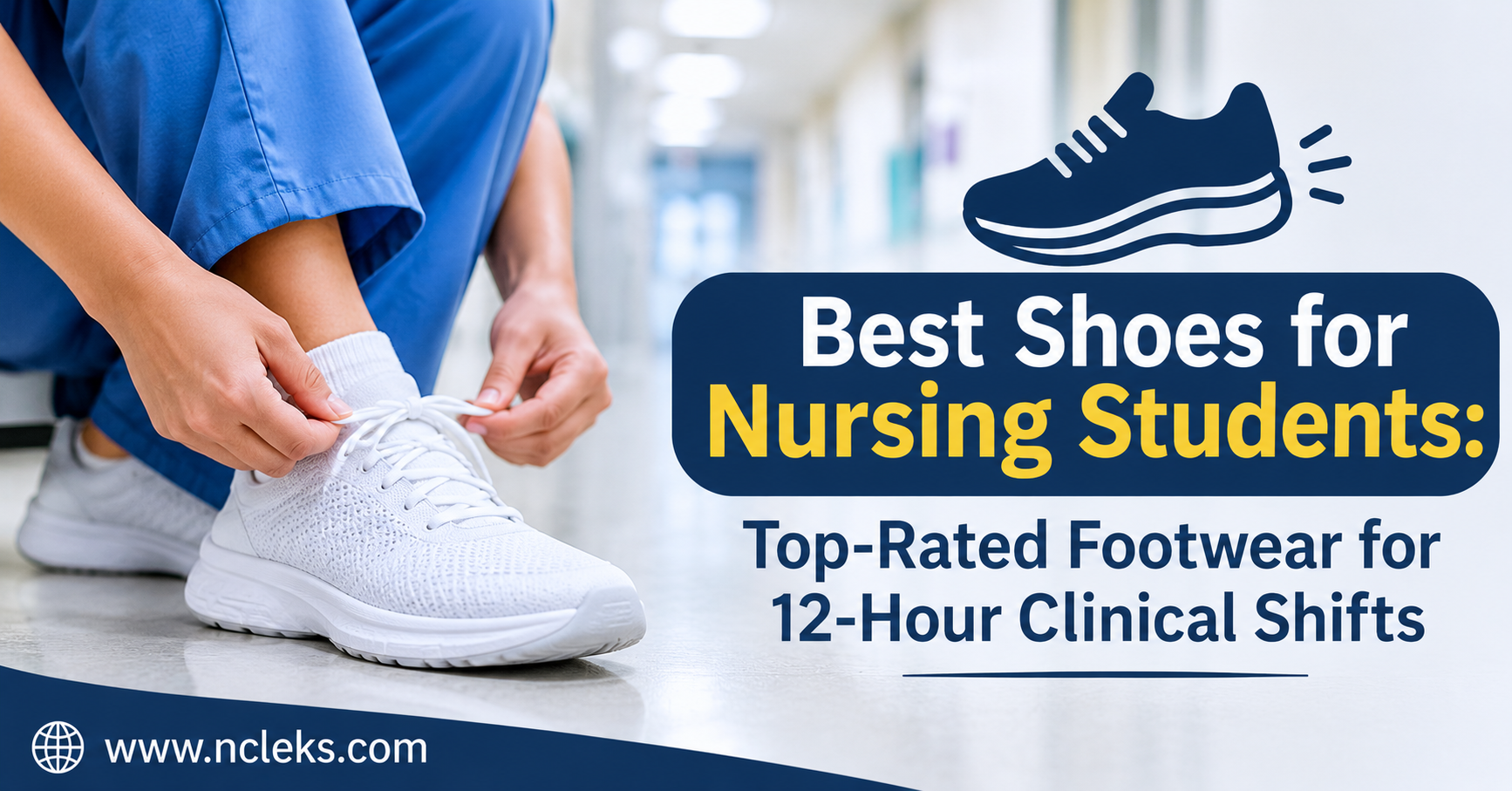
Best Shoes for Nursing Students: Top-Rated Footwear for 12-Hour Clinical Shifts
Why the Best Shoes for Nursing Students Matter on Clinical Days
Ask nurses what they wish they had known before their first clinical rotation, and many will mention their feet. Finding the best shoes for nursing students is not a fashion decision. It is a safety and performance decision. During 12-hour clinical shifts, students often walk several miles, stand at the bedside for long stretches, and pivot quickly during patient transfers. They do all of this on hard hospital floors that can be wet with water, body fluids, or cleaning solution. Poor footwear contributes to foot pain, plantar fasciitis, low back strain, and slips that can injure you or a patient you are assisting.
Footwear also affects how you think. When your arches ache by hour eight, it is harder to focus on a medication pass, an assessment, or a care plan conversation with your instructor. Comfortable nursing shoes help you stay mentally present for the learning that clinicals are designed to provide.
Your program also cares about what is on your feet. Most schools publish a uniform policy that requires closed-toe, closed-heel, nonporous shoes, often in a solid color such as white or black. Showing up out of compliance is one of the avoidable mistakes covered in our guide to what could get you dropped from class in the first four weeks.
Before buying anything, read your student handbook. Then add shoes to your complete checklist for first-time clinical students. The sections below explain the features that matter, the shoe styles students rely on most, and how to make a pair last.
Key Features to Look for in Nursing Shoes
The best shoes for nursing students share a handful of features regardless of brand.
The first is a slip-resistant outsole. Look for rubber soles labeled slip-resistant, with a tread pattern that channels liquid away from the contact surface. Hospital floors are smooth and frequently mopped, and slips and falls are a common cause of workplace injury among healthcare workers.
The second feature is a fluid-resistant upper. Mesh running shoes feel light, but they absorb blood, urine, and medication spills, which creates a real infection control problem. This connects directly to the principles in our review of isolation precautions NCLEX questions, because contaminated footwear can carry organisms from room to room. Leather, synthetic leather, or coated uppers that wipe clean with hospital disinfectant are ideal.
Third, prioritize cushioning and arch support. A thicker midsole made of responsive foam absorbs shock on hard floors, and a supportive footbed reduces strain on the plantar fascia. If you have flat feet or overpronate, a stability shoe or a quality insert can make a noticeable difference across 12-hour clinical shifts.
Fourth, confirm that the shoe has a closed toe and a closed heel. Open-back clogs and shoes with ventilation holes are commonly prohibited because they do not protect against dropped sharps or splashes.
Finally, consider weight and toe box width. A roomy toe box accommodates the natural swelling your feet experience by late afternoon. Thinking about footwear through a hazard lens is the same mindset you use on risk-based NCLEX questions about safety: identify the hazard, then choose the protection.

Top-Rated Nursing Shoes Students Rely On
There is no single perfect pair. It helps to think in categories, because the best shoes for nursing students depend on your foot shape, your budget, and your program rules. The following styles consistently show up in nursing locker rooms.
Maximum-cushion sneakers. Hoka's Bondi and Clifton lines are popular with nurses. They have thick, rocker-shaped midsoles that reduce impact and help roll the foot forward with each step. Many nurses with foot pain rely on them. However, the mesh versions may not meet fluid-resistance requirements, so look for leather or water-resistant editions.
Healthcare-specific sneakers. Clove shoes were designed specifically for clinical environments. Their uppers are fluid-resistant and wipe clean easily, and they come in solid colors that fit most uniform policies. Some students find them firmer than running shoes and add a cushioned insole.
Structured running shoes. Students who overpronate or need extra width often prefer models such as the Brooks Ghost, the Brooks Glycerin, or the stability-focused Brooks Adrenaline GTS. New Balance models that come in wide widths are another common choice. Choose all-black or all-white leather versions when they are available.
Professional clogs. Dansko clogs have a long reputation in nursing. Their rigid sole and rocker bottom support posture, and the leather upper, is easy to clean. Closed-back healthcare clogs without ventilation holes, such as Crocs On The Clock, are a lighter and more affordable option.
Whatever you choose, test the shoes during long practice sessions first. A pair that feels fine during a 90-minute simulation lab check-off may feel very different by the end of a demanding med-surg rotation.

Clogs vs. Sneakers for 12-Hour Clinical Shifts
One of the most common debates among students is clogs versus sneakers, and both have loyal fans.
Clogs offer a firm, stable platform and a rocker sole that shifts pressure away from the heel and the ball of the foot. Many nurses with lower back pain find that the slightly elevated heel improves their posture during long periods of standing. Clogs also slip on and off easily and are simple to disinfect. The tradeoff is that they can feel heavy and take longer to break in. They may also raise the risk of a rolled ankle for people who are not used to them, especially when moving quickly during an emergency.
Sneakers feel natural right away, weigh less, and give more ankle security when you are rushing to a call light or helping reposition a patient. Modern cushioned nursing shoes in sneaker form have closed much of the comfort gap. Their weakness is that the softest foams compress over time, so support fades faster than it does in a clog.
For most students, sneakers are the easier starting point because they require less adjustment and fit most dress codes. If you prefer a firm surface or have a history of back pain, clogs are worth trying.
Some nurses keep one pair of each and alternate them. This gives the foam time to recover between 12-hour clinical shifts and changes the pressure points on your feet. Judge a pair by how your body feels at the end of the day, not during the first hour. Recovery matters as well, and our article on how nurses can decompress after a long shift offers ideas for winding down physically and mentally.
Fit, Socks, and Break-In Tips for Long Clinical Days
Even the best shoes for nursing students will let you down if they do not fit correctly. Shop in the late afternoon or evening, when your feet are at their largest, and wear the socks you plan to use at clinical. Leave roughly a thumb's width of space between your longest toe and the end of the shoe, and make sure your heel does not slide up when you walk. If one foot is larger than the other, fit the larger foot.
Socks deserve as much attention as shoes. Graduated compression socks, typically in the 15 to 20 mmHg range, support venous return and reduce the leg fatigue and ankle swelling that build up when you stand all day. Moisture-wicking fabrics help prevent blisters. If you have a history of circulatory problems, check with your healthcare provider before using higher compression levels.
Break in new nursing shoes gradually. Wear them around the house, on errands, and during shorter lab sessions for at least a week before your first full clinical day. Never debut a new pair on a 12-hour clinical shift. Rotating two pairs also extends the life of both.
If you work part-time as a CNA, patient care tech, or in another role from our list of flexible jobs for nursing students, your shoes will log even more hours, so plan to replace them sooner. If the cost of quality footwear feels overwhelming on top of tuition, our guide to funding nursing school may help you make room in your budget for essential supplies.

When to Replace Your Nursing Shoes and Why It Matters for Your Career
Nursing shoes do not last forever, even when they still look new. Many cushioned athletic-style shoes lose much of their shock absorption after roughly 300 to 500 miles of walking. For a student who works 12-hour clinical shifts two or three times a week, plus labs and a job, that point can arrive within six months to a year.
Watch for new aches in your knees, hips, or back. Other warning signs include visible creasing or compression in the midsole, tread that has worn smooth, and shoes that tilt inward or outward when you set them on a flat table. Worn tread is a slip hazard, so do not wait for pain before you replace a pair.
Investing in the best shoes for nursing students now is also an investment in your future practice. Protecting your body, preventing injury, and noticing small warning signs are habits that support a long career at the bedside. Back and foot injuries push experienced nurses out of direct patient care, and good footwear is one of the simplest protective steps you can take.
Comfortable feet also leave you with more energy for learning. When clinicals feel physically manageable, you have more stamina for evening study sessions and exam prep. If school still feels like too much, our step-by-step survival guide for overwhelmed nursing students can help you rebalance.
Choose the best shoes for nursing students based on fit and safety first. Pair them with steady study habits, and your 12-hour clinical shifts, and, eventually, the NCLEX, will feel far more manageable.


No comments yet. Be the first to comment!