How to Survive an Accelerated BSN (ABSN) Program: 8 Tips for Fast-Track Students
Why an Accelerated BSN Program Feels So Intense
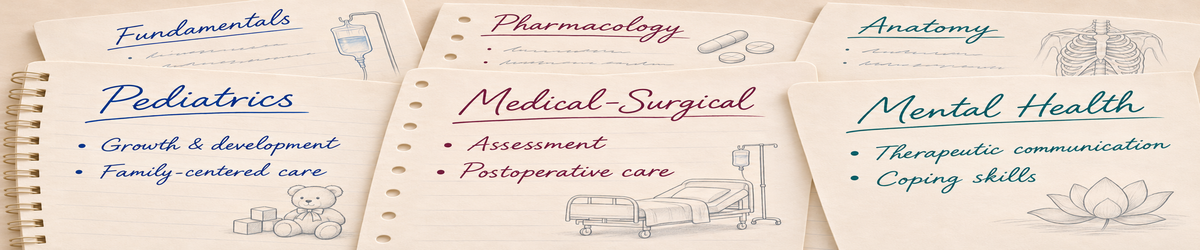
If you already hold a bachelor's degree in another field and have decided to become a nurse, an accelerated BSN program is usually the fastest route to licensure. Most programs compress a traditional nursing curriculum into 12 to 18 months. That means fundamentals, pharmacology, med-surg, mental health, maternity, and pediatrics come back-to-back, often with only a few days between terms. An ABSN program is not harder because the content is different. It is harder because the pace leaves almost no room to recover from a bad week.

Fast-track nursing students also face their own mix of pressures. Many are career changers juggling mortgages, children, or the identity shift of going from an expert in one field to a beginner in another. Others come straight from a science degree and assume their old study habits will carry them, then discover that nursing exams test clinical judgment rather than recall. Within the first month, you may sit in lecture in the morning, attend a skills lab in the afternoon, and prepare for a clinical shift that starts before sunrise the next day.

The good news is that thousands of students finish accelerated BSN programs every year and pass the NCLEX on their first attempt. The ones who thrive are rarely the smartest people in the cohort. They are the ones who build systems early. The eight tips below are organized around those systems: how you study, how you manage time and money, how you protect your health, and how you keep the NCLEX in view from day one. If you already feel buried, start with this step-by-step survival guide for overwhelmed nursing students, then come back here to build your plan.

Tips 1 and 2: Treat Your ABSN Program Like a Full-Time Job and Front-Load Every Week
Tip 1: Treat school like a 50- to 60-hour work week. The most common mistake career changers make is treating the program like a part-time commitment. Between lecture, lab, clinical, and independent study, most accelerated students log 50 to 60 hours a week. Build a weekly calendar that blocks every class, every clinical shift, your commute, and at least three hours of focused study each weekday. Treat those study blocks like meetings with a manager and protect them. Many faculty advise against working more than about 12 to 16 hours a week during an ABSN program. If you need income, look for roles that bend around your schedule, like the ones in this list of flexible jobs for nursing students.

Tip 2: Front-load your week and preview before lecture. In a traditional program, you can sometimes catch up over a long weekend. In fast-track nursing school, the next unit starts before you have digested the last one. Spend 20 to 30 minutes before each lecture skimming the chapter objectives, headings, and key terms. You are not trying to learn everything in advance. You are building a mental scaffold so the lecture becomes your second exposure to the material instead of your first.
Sunday evenings work well for a weekly reset. Write down every exam, care plan, quiz, and clinical paperwork deadline for the next 14 days, then plan backward from each one. The first few weeks also shape your reputation with faculty, and missed early deadlines can trigger academic warnings, as this guide to what can get you dropped in the first 4 weeks of nursing school explains.

Tips 3 and 4: Study for Nursing Exams, Not Science Exams
Tip 3: Shift from memorization to application. If your first degree was in biology, chemistry, or psychology, you may be used to exams that reward precise recall. Nursing exams in an accelerated BSN program ask something different: given everything you know, what should the nurse do first? Several answer options are often technically correct, and your job is to choose the safest or highest priority action. Learn the core frameworks early, including airway, breathing, and circulation, Maslow's hierarchy, the nursing process, and the difference between stable and unstable clients. This breakdown of nursing test-taking strategies and clinical judgment is worth reading before your first fundamentals exam.

Tip 4: Use active recall and practice questions every day. Rereading notes feels productive but builds little long-term memory. Close the book and quiz yourself, explain a concept out loud as if teaching a new graduate, or draw a disease process from memory. Aim for 20 to 30 practice questions most days, and spend more time on the rationales than on the questions themselves. For every missed item, write one sentence explaining why the correct answer is right and why your choice was wrong.
Pharmacology is where this matters most, since students in an ABSN program often cover hundreds of medications in a single term. Focus on drug classes, prototype drugs, common suffixes, and the nursing priorities for each class instead of memorizing every brand name. This guide to studying pharmacology without memorizing everything shows how to build that class-based approach.

Tips 5 and 6: Prepare for Clinicals Like an Exam and Build a Smart Study Group
Tip 5: Prepare for clinicals the night before. Clinical days in accelerated programs are long and often begin before 0700. If your program provides patient assignments in advance, look up each diagnosis, the scheduled medications, and the lab values you will need to monitor. Know why your patient is taking each drug and what you would assess before giving it. Pack real food and water, lay out your uniform, and set two alarms. Students who show up prepared ask better questions, get more hands-on opportunities, and earn stronger evaluations. For practical help managing long days, read these sleep and meal prep tips for long clinical shifts.
Clinical is also where med-surg content finally clicks. When you care for a client with heart failure, connect what you see at the bedside, such as crackles, edema, and daily weight changes, to what you read in the textbook. That connection makes exam questions far easier to answer, a point reinforced in these med-surg study tips from an A-student.
Tip 6: Keep your study group small and structured. Groups of three or four work best. Set an agenda before every session, assign each person a topic to teach, and finish with practice questions. Career changers bring valuable strengths to a group, including project management, communication, and calm under pressure, while recent science graduates often bring strong pathophysiology foundations. A well-run group in a fast-track nursing cohort becomes your accountability system and your emotional support at the same time.

Tips 7 and 8: Protect Your Health and Your Mindset in Fast-Track Nursing School
Tip 7: Make sleep, food, and movement non-negotiable. When the workload spikes, sleep is usually the first thing students cut, yet sleep is when your brain consolidates what you studied that day. Aim for at least seven hours on most nights, even during exam weeks. Prep simple meals on weekends, keep protein-rich snacks in your bag, and fit in short walks or workouts, even 20 minutes at a time. These habits are not extras. They are what keep you functional by month nine of an accelerated BSN program. Watch for early warning signs such as dreading every class, constant irritability, or falling grades despite more study hours, and review these signs of nursing school burnout and how to recover.

Tip 8: Expect imposter syndrome and plan for it. Many fast-track nursing students were successful professionals before nursing school, so feeling clumsy with a blood pressure cuff or freezing during a clinical question can be jarring. Remember that every nurse you admire was once a beginner, and that your program admitted you because faculty believed you could do this. Keep a short log of small wins, like your first successful injection or a strong care plan grade, and reread it during hard weeks. Talk with classmates, a mentor, or your school's counseling services before stress becomes a crisis. These practical mindset shifts for overcoming imposter syndrome can help you reframe self-doubt as a normal part of growth.

Keep the NCLEX in View From Day One of Your Accelerated BSN
One advantage of an accelerated BSN is that graduation and the NCLEX arrive quickly, so the content you learned in your first term is still relatively fresh when you test. Use that to your advantage by treating every course exam as NCLEX practice. Most ABSN program exams are written in NCLEX style, with priority, delegation, and select-all-that-apply questions. If those multi-answer items give you trouble, learn the true-or-false method for each option in this guide to answering select-all-that-apply questions.

Build a cumulative review habit early. Once a week, spend an hour answering mixed questions from previous courses so that fundamentals and pharmacology do not fade while you focus on maternity or pediatrics. Flashcards work well for short gaps in your day, such as waiting for clinical post-conference or riding public transit. In your final term, shift toward full-length practice exams and readiness assessments that mimic test-day conditions, including the Final Readiness Assessment exams available on NCLEKS. This approach to spaced, cumulative practice is explained in detail in these smart NCLEX study methods for retaining information.
Surviving fast-track nursing school comes down to consistency more than brilliance. Students who calendar their weeks, practice questions daily, prepare for clinicals, protect their health, and keep the NCLEX in sight from the start are the ones who cross the finish line ready to practice. Your ABSN program is short, demanding, and absolutely achievable, and every disciplined week brings you closer to your license.


No comments yet. Be the first to comment!