How to Prioritize NCLEX Questions Using ABCs, Maslow, and Safety
Prioritization questions are among the most critical and commonly tested on the NCLEX test. The questions assess a nursing student’s judgement in determining the urgency of a patient’s problems and the right course of action to be assumed
In the clinical setting, a nurse should be able to decide on what move to prioritize, especially when dealing with several patients with different needs. For guidance in decision-making in such a scenario, student nurses are taught to rely on various frameworks.
Widely used frameworks include ABCs (Airway, Breathing, and Circulation), Maslow’s Hierarchy of Needs, and Safety or Risk Reduction principles. These frameworks lead you to the right course of action in the clinical setting, and you can use them in answering related NCLEX questions.
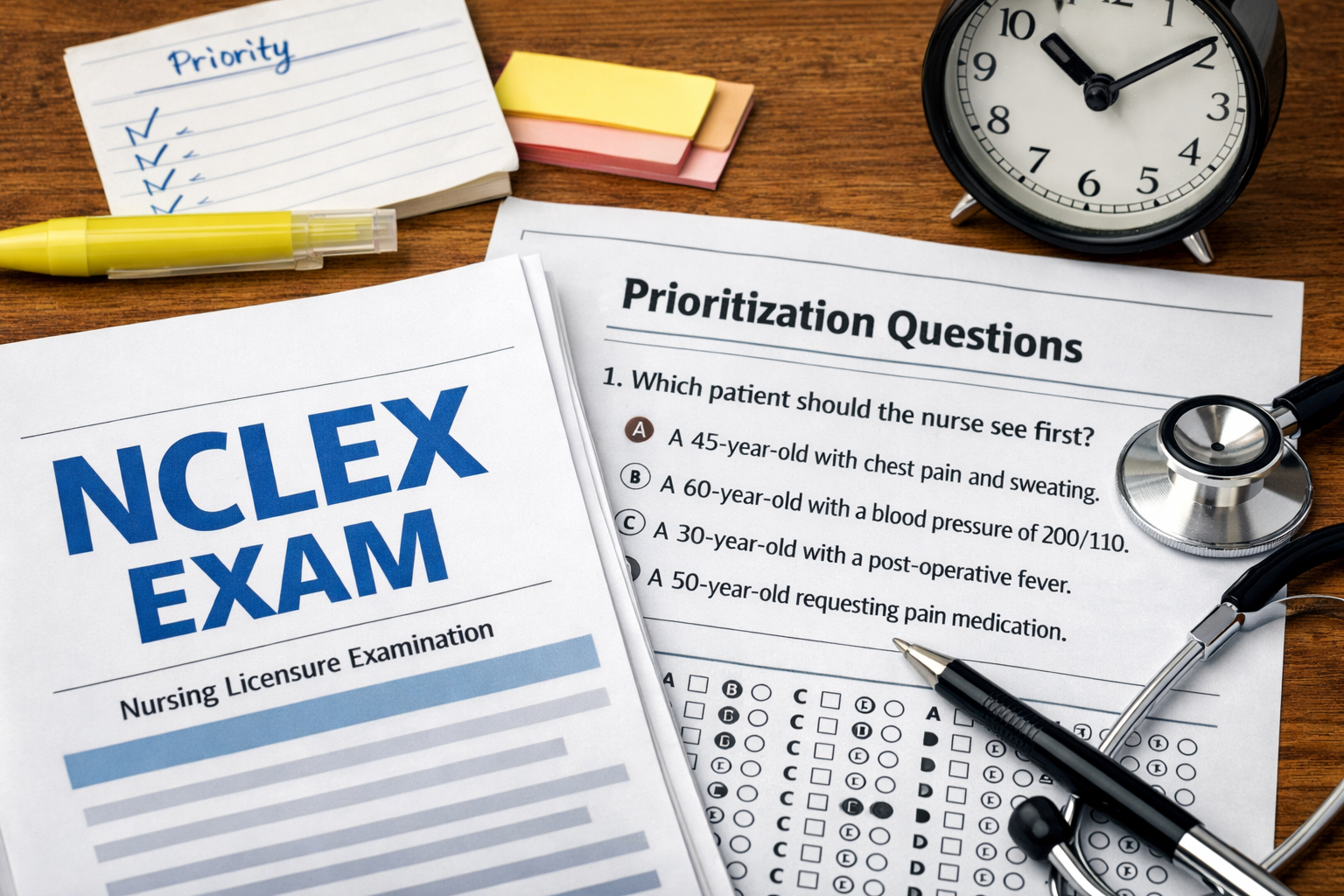
Read on to know how to use the frameworks when sitting for the NCLEX.
Overview of NCLEX Prioritization Questions
As you get ready for the NCLEX test, you should familiarize yourself with the prioritization questions. You ‘prioritize’ patients to assess first, which intervention to use, and conditions to attend to. The questions examine clinical judgement and critical thinking, especially in emergencies.

The questions may be in the following formats:
- Which patient requires urgent assessment?
- Which condition requires immediate intervention?
- Which patient should the nurse see first?
- What is the nurse’s priority action?
When answering the questions, the main aim is to determine the situation that presents more risk to life and health. The ABC framework, Maslow’s hierarchy, and safety principles give a systematic template to follow to the ideal decision.
The ABC Framework (Airway, Breathing, Circulation)
The ABC framework is a crucial prioritization approach in nursing and emergency care. It leans on the body’s most fundamental functions necessary for survival.
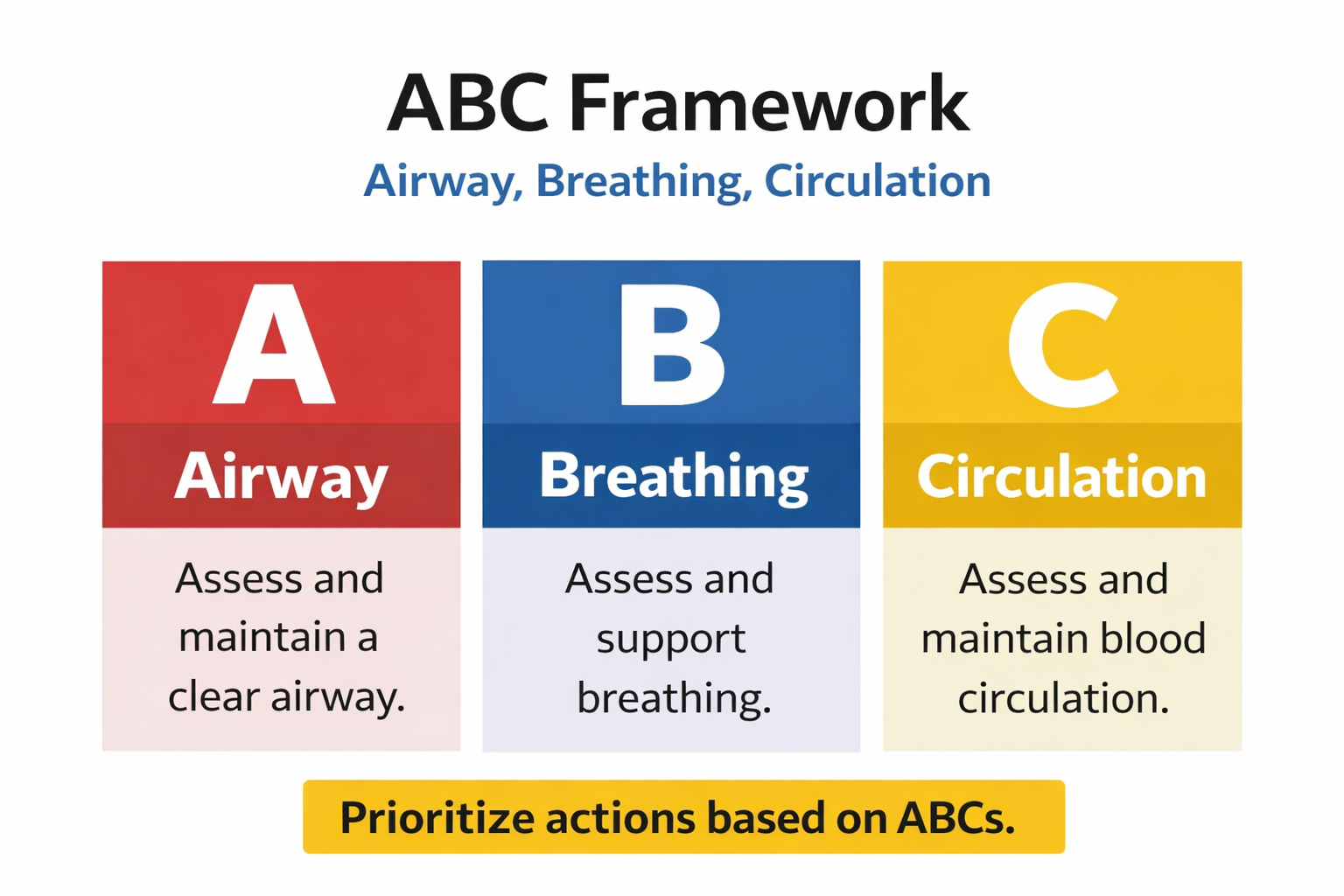
Here is a breakdown of this strategy.
Airway
A patient’s airways should be open, without any blockage, for air to reach the lungs. Any obstruction or airway deformity could lead to respiratory failure. Airway emergencies include:
- Throat swelling
- Foreign object obstruction
- Anaphylactic shock from severe allergic reactions
- Unconscious patients with airway blockage
- Excess secretions leading to obstruction
Airway problems are the highest priority, as without an adequate oxygen supply, organs like the brain start to shut down in a matter of minutes.
Breathing
Breathing is the entry and exit of air from the lungs through the airways and the exchange of oxygen and carbon dioxide. Breathing problems can present as rapid or labored breathing, shortness of breath, hyperventilation and asthma attacks.
While breathing problems are serious, they come second after airway troubles, as breathing is impossible with a blocked airway. Respiratory assessment helps determine its severity.
Circulation
Circulation is the movement of blood throughout the body, transporting oxygen, nutrients, and other essentials to various tissues. The following are examples of circulatory issues.
- Severe bleeding
- Shock
- Abnormal vital signs, such as high or low blood pressure, tachycardia, and bradycardia
- Cardiac arrest
- Irregular heart rhythms
Circulation issues are critical, but fall after airway and breathing in terms of urgency. However, they may be prioritized if they pose an immediate threat to life.
Applying ABCs to NCLEX Questions
When answering the questions, you follow the ABC hierarchy. Does the patient have airway issues? If yes, then that’s the urgent case. You then ask yourself, is there a case of breathing difficulty? Are there any circulatory issues like bleeding? The urgency follows in the highlighted order.
Maslow’s Hierarchy of Needs in NCLEX Questions
Maslow’s Hierarchy of Needs is a motivational school of thought developed by Abraham Maslow, a psychologist. This framework organizes human needs into levels, from the most basic physiological needs to higher psychological needs.
It is another crucial framework to use in your NCLEX exams, and it classifies human needs into five levels, as highlighted below.
- Physiological needs
- Safety needs
- Love and belonging
- Self-esteem
- Self-actualization
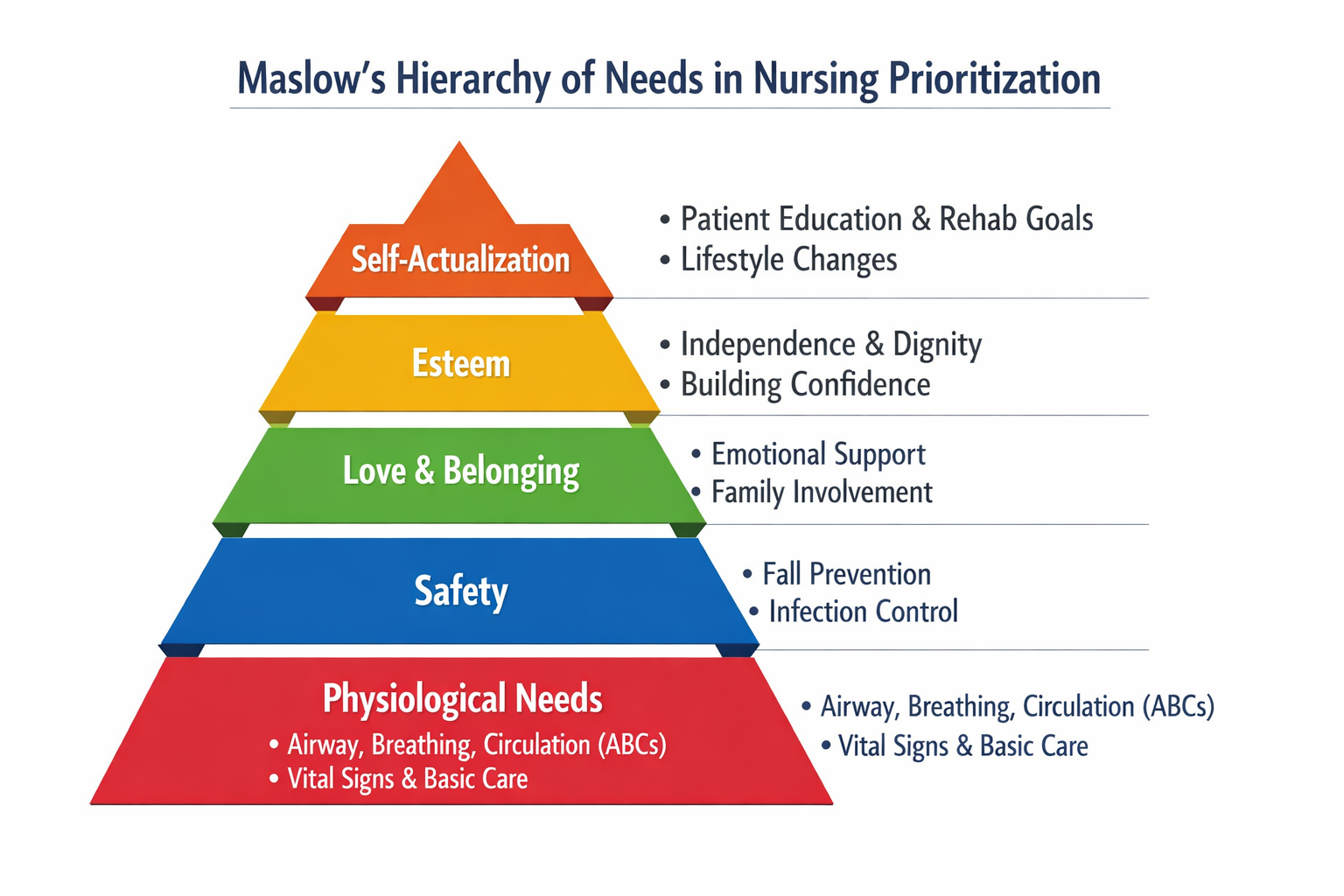
Physiological Needs
These are the fundamental requirements needed by our bodies for survival. They are crucial and should be met first before other needs. They include oxygen, food, water, body temperature regulation, sleep, and pain management
Safety Needs
Safety needs encompass protection from harm, injury, and other complications. Examples of these needs are infection prevention, ensuring medication safety, and monitoring unstable conditions.
These needs become a priority after sorting out physiological needs. For instance, you ensure a patient with breathing complications can breathe before preventing infections around them.
Psychological and Social Needs
Love and belonging, self-esteem, and self-actualization fall under psychological and social needs. They involve someone’s emotional well-being and their relationship to others and their environment.
Attention is required for situations like loneliness, fear, anxiety, depression, and general emotional support. While these needs are crucial for a patient’s health, they are typically attended to after sorting out physical health concerns.
Applying Maslow’s Hierarchy of Needs in NCLEX
As you weigh the answer options in your exam, you should remember that physiological needs always come before psychological and social needs. Pick the choice that directly addresses the human body’s functionality.
For instance:
- You attend to a patient’s blocked airway before focusing on their depression
- Severe pain is more urgent than patient education
Dehydration is more crucial than social interaction

Safety and Risk Reduction in NCLEX Prioritization Questions
Patient safety is an essential concept that the NCLEX test examines. As a nurse, you are responsible for preventing harm to your patients and reducing risks that may lead to injury and other complications.
Safety prioritization focuses on identifying and taking control of situations where a patient is at immediate risk of harm. Most of the questions revolve around risk prevention.
Common safety concerns include:
- Medication errors
- Risk of falling in elderly or confused patients
- Equipment malfunctions
A situation that is highly likely to lead to harm calls for more attention, even if the patient’s current condition is not life-threatening.
Safety-Prioritization in the Test
As a nurse, you urgently attend to:
- A postoperative patient with excessive bleeding
- A patient receiving the wrong medication
- A patient showing early signs of infection
Additional Rules for NCLEX Prioritization
Apart from the mentioned frameworks, there are other approaches to follow to help you know cases to treat with weightiness. Let us look at some of these guidelines.
Acute vs. Chronic Conditions
Acute conditions are sudden and often severe, calling for prompt action. On the other hand, chronic illnesses develop gradually over a long time. Always attend to patients with acute illnesses before those with chronic conditions, unless in complicated situations.
For instance, as a nurse, you focus more on a patient with sudden-onset chest pain than on another one with chronic arthritis pain.
Unstable vs. Stable Patients
Unstable patients require immediate care, as in their current state, they can pose harm to themselves and those around them. Stable patients with predictable signs can wait longer. Signs of instability can be:
- Abnormal vital signs
- Severe pain
- High irritability and/or restlessness
- Sudden changes in consciousness
- Respiratory distress
Expected vs Unexpected Findings
Expected findings when assessing a patient are typically not a cause for alarm. However, the tide changes when you get unexpected results, which might indicate complications, prompting further investigations.
Examples of unexpected findings are new confusion in an elderly patient and a sudden drop in blood pressure.
A Stepwise Approach for Answering Prioritization Questions
Follow this simple rationale when answering prioritization questions in the NCLEX.
Step 1: Check for Airway Issues
A blocked or compromised airway is always the top priority.
Step 2: Look for Breathing Troubles
Respiratory distress or low oxygen saturation calls for immediate action.
Step 3: Evaluate Circulatory Problems
Severe bleeding, shock, and cardiac distress should be addressed quickly.
Step 4: Apply Maslow’s Hierarchy
Basic physiological needs come first before psychological, emotional, and social needs.
Step 5: Consider Patient Safety
Identify and manage risks that could pose serious harm to patients.
Step 6: Determine Patient Stability
Direct your attention to unstable or deteriorating patients.
Example of Prioritization Question in NCLEX
A nurse must assess four patients. Which patient should be seen first?
- A patient with anxiety before surgery
- A patient requesting pain medication for chronic back pain
- A patient with oxygen saturation of 88%
- A patient who needs help with soiled beddings
Based on the prioritization guidelines:
- An oxygen saturation of 88% indicates impaired breathing
- Breathing falls under the ABC framework, second in importance
- Under Maslow’s hierarchy, it is a physiological need.
Therefore, the answer is C, a patient with oxygen saturation of 88%.
Wrapping Up
NCLEX prioritization questions test a nurse’s ability to recognize and respond to a patient’s most urgent needs. By applying frameworks like ABCs, Maslow’s Hierarchy of Needs, and Safety principles, you can logically and confidently tackle these questions.
Through consistent practice and familiarization with these approaches, nursing students can strengthen their clinical and critical thinking skills. The result is excellent performance in the NCLEX and in their careers.


No comments yet. Be the first to comment!